
Single Fluid Dust Suppression
Single fluid dust suppression is a practical dust control method that uses only water to create fine droplets for reducing airborne dust in industrial and material handling areas. Unlike dual-fluid systems that use both water and compressed air, a single fluid setup relies on hydraulic atomization, which means pressurized water passes through specially designed nozzles to form a fine mist. This makes it a dependable option for sites that want effective dust control with a simpler system layout. In crushers, conveyor transfer points, hoppers, stockyards, coal handling plants, and metals or bulk-material facilities, single fluid dust suppression can help capture floating dust near the source before it spreads through the work area. Because it does not require a separate compressed-air line, it is often chosen where lower system complexity and easier installation are important
Single fluid dust suppression is a dust control system that uses only one medium, water, to generate atomized spray for dust reduction. In this arrangement, water is pressurized by a pump and delivered through nozzles that break the water into fine droplets. Since the atomization happens hydraulically, there is no need for an air compressor or separate air-water supply arrangement. This approach is commonly used where industries need efficient source-point dust suppression with a more straightforward system than twin-fluid or air-assisted solutions. It is especially useful in material handling applications where dust is generated continuously and where plant operators prefer a water-only suppression method
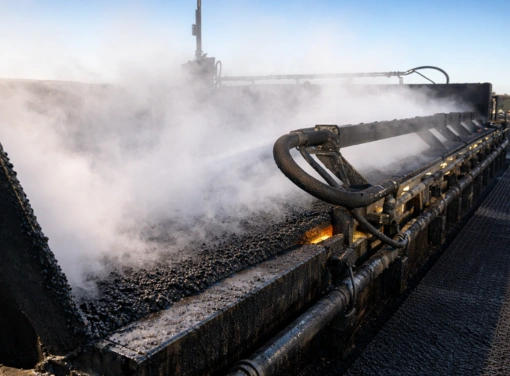
A single fluid dust suppression system works by pressurizing water and sending it through atomizing nozzles. These nozzles create a fine mist or fog that interacts with airborne dust particles. When the droplets come into contact with the dust, the particles become heavier and settle more quickly instead of remaining suspended in the air.
System performance depends on factors such as:
- water pressure
- nozzle selection
- droplet size and dust particle size
- header layout
- installation position
- airflow pattern and coverage area
A properly designed system helps reduce dust spread and improve site conditions by applying fine droplets exactly where dust is released.
Simpler system arrangement
The system uses only water, making installation simpler than air-and-water dust suppression systems.
Effective fine mist dust control
Hydraulic atomizing nozzles create fine droplets that help capture airborne dust near the source.
No compressed air requirement
There is no need for separate compressor infrastructure or air lines.
Suitable for source-point dust suppression
The system is commonly used where dust is released at transfer points, conveyors, hoppers, and handling zones.
Easier plant integration
The water-only design makes integration more practical for many existing industrial plants.
Better operating simplicity
A straightforward system layout can support easier operation and maintenance in day-to-day plant use.
A reliable single fluid dust suppression system should be designed around the actual dust source and plant condition. Important features include:

hydraulic atomizing nozzles
water-only operation
no compressed air requirement
properly selected pump pressure
filtration to protect nozzles
header-based or localized installation
industrial-grade piping and fittings
easy maintenance access
application-based nozzle positioning
reliable performance in continuous service
Parameter | Single Fluid Dust Suppression | Twin-Fluid Dust Control |
|---|---|---|
| Working principle | Uses only water for hydraulic atomization | Uses water and compressed air for atomization |
| Atomizing medium | Water only | Water + compressed air |
| System complexity | Simpler system layout | More complex due to air and water arrangement |
| Compressed air requirement | Not required | Required |
| Installation | Easier to install | Requires air line and additional setup |
| Utility requirement | Only water and pump system | Water system plus compressed air system |
| Droplet generation | Fine droplets through hydraulic pressure | Finer atomization possible with air assistance |
| Suitable applications | Source-point dust suppression where simple water-only setup is preferred | Applications needing finer atomization and higher control |
| Water availability consideration | Depends mainly on water pressure and flow | Depends on both water and air availability |
| Plant integration | Easier for retrofit and simple layouts | Better where compressed air is already available |
| Material sensitivity | Suitable where controlled water-only suppression is acceptable | Useful where finer droplet control is needed for sensitive materials |
| Maintenance | Generally simpler | Higher due to extra air-related components |
| Best choice when | Simplicity and water-only operation are important | Compressed air is available and finer mist is required |
We provide single fluid dust suppression solutions with a practical, application-based approach. Instead of using a standard layout for every site, we focus on matching the system to the dust source, process area, and required coverage.
Customized system design
We plan the suppression arrangement based on the actual dust-generating zone and operating condition.
Water-only dust control solutions
Our systems are suitable for industries looking for simpler dust suppression without compressed air dependency.
Proper nozzle and header selection
We help select the right nozzle arrangement for transfer points, hoppers, conveyors, and other process areas.
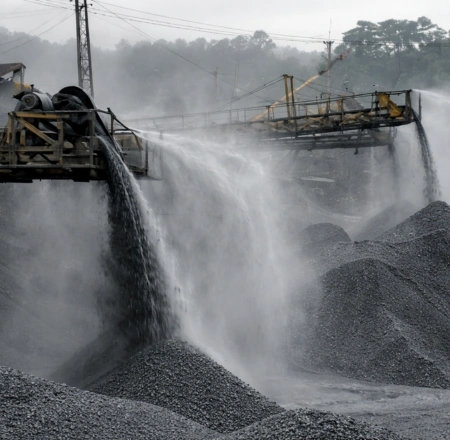
Reliable industrial components
We use durable components suitable for long-term industrial operation.
Source-based dust reduction
Our approach supports dust suppression closer to the point where dust is generated.
Support for different industries
We provide cold fog dust suppression solutions for mining, cement, coal, steel, recycling, and bulk material handling industries.
FAQs – Single Fluid Dust Suppression
1.What is single fluid dust suppression?
Single fluid dust suppression is a water-only dust control method that uses hydraulic atomization to create fine droplets for reducing airborne dust.
2.Does single fluid dust suppression need compressed air?
No. A key feature of single fluid dust suppression is that it does not require compressed air for atomization.
3.Where is single fluid dust suppression used?
It is commonly used in crusher plants, transfer points, stockyards, metals handling, and bulk material process areas.
4.How does single fluid dust suppression work?
It works by pressurizing water and passing it through atomizing nozzles that create fine droplets to capture airborne dust.
5.Is single fluid dust suppression suitable for industrial use?
Yes. It is widely used in industrial dust-control and material handling applications where source-point suppression is needed.
6.What is the difference between single fluid and twin-fluid dust suppression?
Single fluid uses only water, while twin-fluid uses water and compressed air for atomization.
7.Can the system be automated?
Yes. A cold fog dust suppression system can be connected with control panels, timers, or automation systems based on the site requirement.