
Wet fog dust suppression system
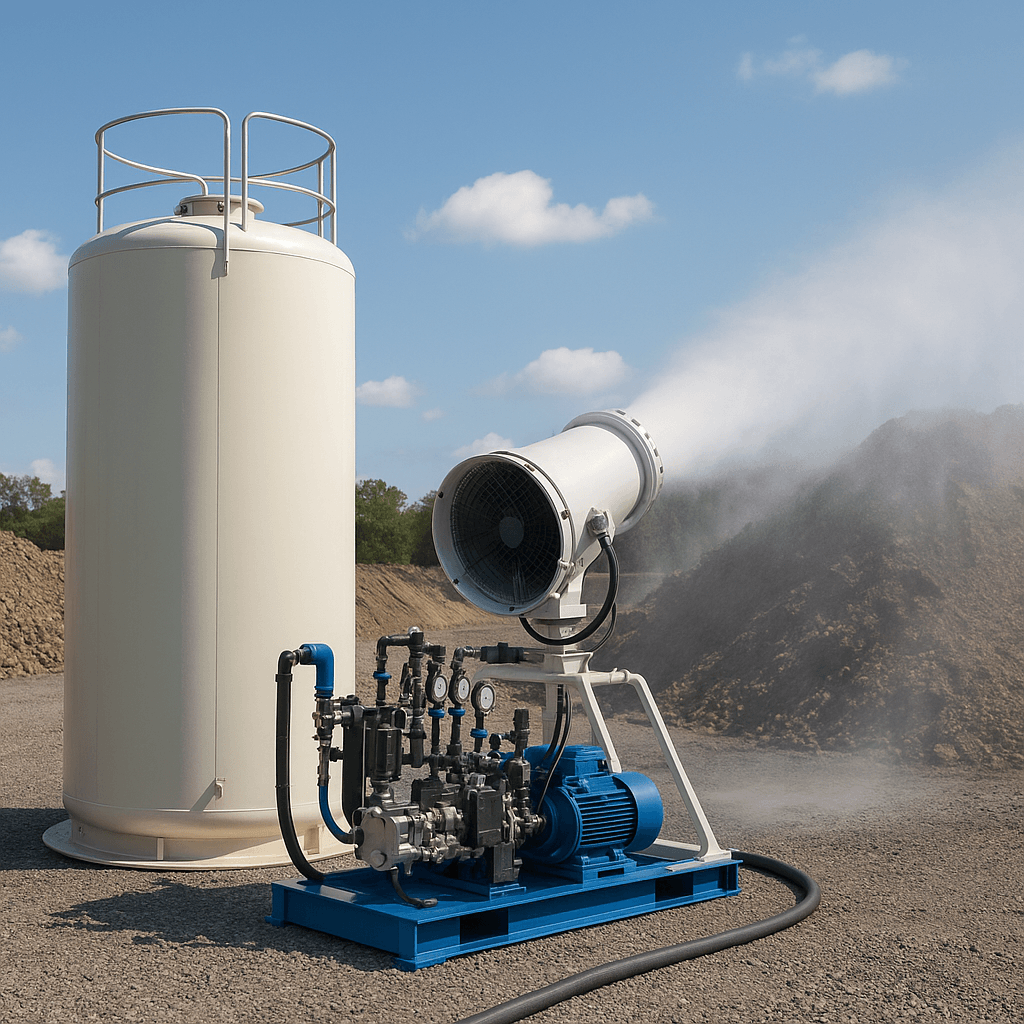
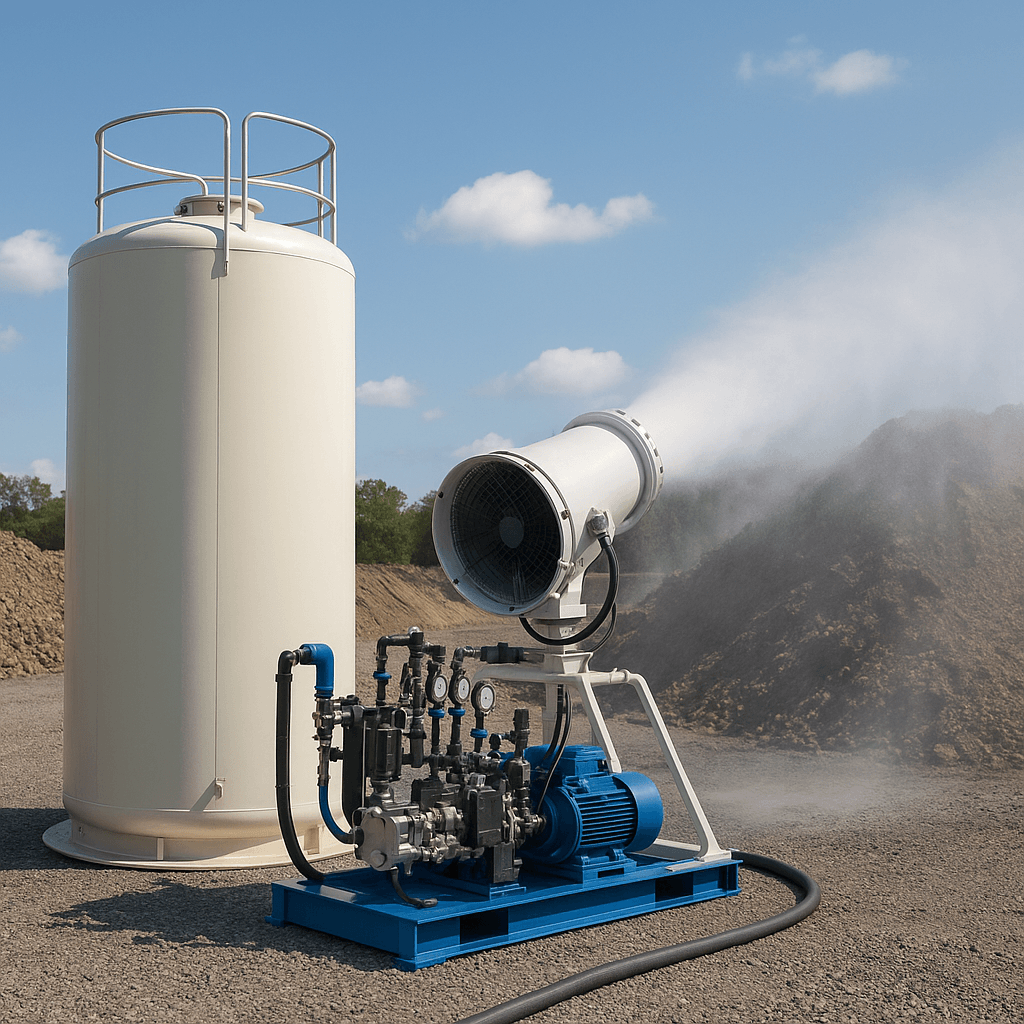
Wet fog and misting systems push water through fine nozzles at high pressure to create a dense mist. They need no compressed air, which makes them simple to install over long runs and open areas.
Overview
Welcome to Dust Suppression Systems Co, a pioneering leader in innovative dust control solutions with over 15 years of hands-on industry experience. Our expertise lies in developing effective dust management systems that enhance safety and compliance across a multitude of industrial applications. Our Wet Fog Dust Suppression System is meticulously engineered to manage dust efficiently, ensuring a cleaner and safer working environment for your operations.
What is a wet fog dust suppression system?
The Wet Fog Dust Suppression System employs advanced high-pressure water fogging technology to create an ultra-fine mist of water droplets, ranging from 20 to 50 microns in diameter. This precision-engineered wet fog effectively captures airborne dust particles, causing them to agglomerate and settle without adding excess moisture to the surrounding area. This unique feature makes our system particularly suitable for sensitive manufacturing environments and enclosed spaces where traditional dust control methods may fall short.
Applications of wet fog dust suppression
01
Mining operations
Our system minimizes airborne dust during material handling, protecting workers’ lungs and meeting strict safety rules. Clients reported fewer respiratory issues after adopting the system.
02
Construction sites
Ideal for demolition and earthworks, it helps meet environmental standards and avoid costly delays. Project teams have praised its role in preventing fines and improving worksite safety.
03
Recycling facilities
It reduces dust from concrete, wood, and metal, improving air quality and visibility. Clients see longer equipment life and fewer maintenance problems.
04
Coal handling plants
Manages dust effectively during loading/unloading, reducing environmental impact. One plant saw a 40% drop in emissions and a major boost in local air quality.
Versatile applications beyond coal handling
- Coal Handling Plants: Proven solutions for managing dust in coal transfer and processing
- Construction Sites: Controls airborne dust to improve safety and visibility
- Quarries & Mining: Reduces dust from crushing, screening, and material transport
- Temporary & Unpaved Roadways: Minimizes dust clouds for safer travel and reduced environmental impact
- Trusted Across Sectors: Successfully implemented in 50+ projects across India, showcasing reliability and effectiveness
Key advantages of our dust suppression systems
- Over 80% Reduction in Respirable Dust – Improves air quality and ensures worker safety.
- Efficient Water Usage – Maximizes dust control while conserving water and cutting costs.
- Elimination of Excess Moisture – Keeps materials dry for better handling and storage.
- Decreased Chute Blockages – Reduces downtime and maintenance with smoother operations.
- Enhanced Visibility & Safe Work Areas – Creates safer environments by minimizing dust clouds and expanding clean operational zones.
Where misting systems are used
Misting is the practical choice when the dust source is spread out and a little surface moisture does no harm.
- Perimeter lines along boundary walls and sheds
- Loading bays, tipping areas and truck routes
- Crusher and screen surrounds
- Recycling halls and waste transfer stations
- Stockyard edges, combined with rain guns on the piles
From enquiry to a working system
Share the problem
Send photographs, a layout or a short description of where the dust comes from.
Site study
We review each source, the material, water and power available, and any moisture limits.
Design and quote
You receive a layout, equipment list and price for the system that fits.
Install and support
We supply, install and commission, train your operators and stay available for service.
Related systems and applications
Ready to get started? Let’s discuss your project.
Send photos or a layout of the dust source. An engineer will recommend a system and send a budget price.
Do you provide complete solutions for dust suppression in coal handling plants?
Yes, we offer comprehensive solutions, including site assessments, system design, supply, integration, and ongoing maintenance of dust suppression systems for coal handling plants.
Can your systems work alongside existing dust collection systems?
Absolutely! Our coal dust suppression systems can be seamlessly integrated with existing dust collection systems, enhancing overall efficiency and coverage.
Will there be any dripping from the nozzles or cannon?
No, our fog cannons are equipped with anti-drip technology to prevent any leakage during operation, ensuring a clean and efficient process.
Is compressed air required for your dust suppression systems?
Yes, our dry fog systems utilize compressed air at a pressure of approximately 4 to 5 kg/cm² (bar) for optimal performance.
How do your dust extraction systems compare to dust suppression systems?
Dust extraction systems are effective in confined areas, while our dust suppression systems provide broader coverage and control over larger areas, making them ideal for extensive operations.
What is the difference between wet fog and dry fog?
Dry fog uses compressed air to make smaller droplets and adds less moisture. Wet fog uses pump pressure only, has slightly larger droplets and is simpler to run over large areas.
Is a misting system suitable for dust control outdoors?
Yes, particularly along boundaries and at loading areas. In strong wind the nozzle lines should be placed upwind of the source or combined with fencing.
Tell us where the dust is. We will tell you what fits.
Send the basics and an engineer will come back with a recommendation and a budget price.
- No-obligation budgetary proposal
- Design matched to your material and site
- Supply, installation and service