
Industrial dust collector systems
A dust collector pulls dusty air through a filter and returns clean air. It is the method to use where water cannot be, or where the dust is worth recovering.
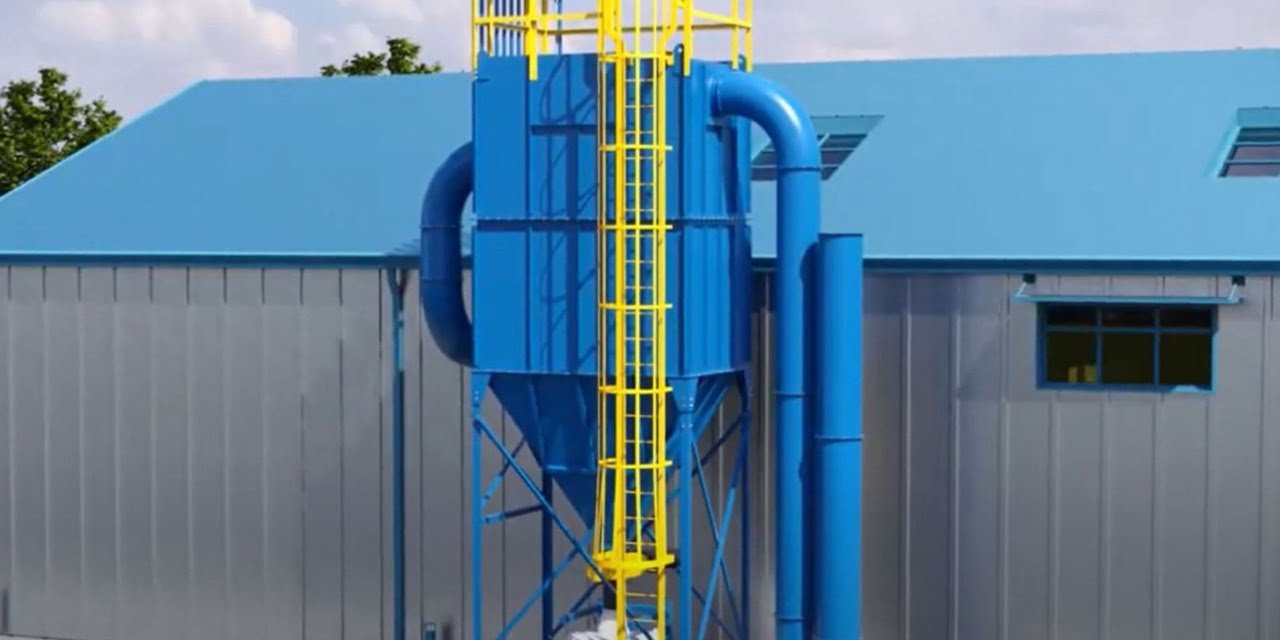
Dust collector dust suppression system
Dust Suppression System dust collector is a type of air pollution control equipment used in factories, plants, warehouses and other industrial applications to meet environmental and workplace safety requirements. It is an effective dust collection systems to control, reduce and remove potentially harmful particulate matter and fumes in an industry from a manufacturing process. Our equipment is specifically designed to purify and filter hazardous dust and fine particulate contaminant matter released into the working environment to maintain and improve air quality standards.
Based on the industry the pollutants may differ. For each industry, we need a specific method of dust collection. Our dust collector systems working in generally by contaminated dust air entering through a filter that first captures and separates the particulate matter and then purified air back into the workplace or environment. The equipment design application is the same as a filter, separate and capturing dust and particulate matter and releasing purified air.
Basic components of dust collectors include a Blower, Filter, Filter Cleaning System, and Dust Removal System.
Different types of dust collection equipment are
- Fabric Baghouse Filter(Pulse-jet Dust collector),
- Cartridge Dust Collectors,
- Cyclones (Inertial Separators),
- Baghouse dust collectors come in various designs and are the most commonly used system because the efficiency is 99%.
The dust collection system is used in industrial sectors such as
- Woodworking,
- Agriculture,
- Food Processing,
- Pharmaceutical,
- Recycling,
- Cement And Rock
- Products,
- Metal Fabrication,
- Mining, And Chemical Processing and Many Others.
Pulse jet dust collectors:-
Pulse jet dust collectors are comes in a variety of designs to meet the application needs of the industry. It is suitable to filter and separate medium, fine and impalpable dusts with high filtering efficiency and a continuous perfect filter cleaning system. The pulse jet filter is a highly efficient, self-maintaining filter for dusts with fully automatic cleaning by compressed air injection. Pulse jet models are the most common type of industrial dust collectors, due to their ability to be easily customized, capability to handle a wide range of temperatures and pressures, and their high collection efficiency. Pulse jet collectors can be fabricated from a wide range of materials, including carbon steel, stainless steel, Galvanized iron and other special alloys.They can be found in most manufacturing environments wherein bulk solids are processed, including chemical and mineral production, food processing plants and metal fabrication.
Cartridge dust collector:-
The advantage of cartridge dust collector is smaller space requirements. Compared to baghouse filter system. Cartridge dust collectors are large fabric area into a smaller space. The filters can be changed from outside the collector, which minimizes safety hazards. It will reduce the labor costs and working time. It is used for very fine to light dust and moderate dust like Powder Coating, Metalworking, Woodworking, Fume Collection, Thermal Spray, Pharmaceutical Manufacturing and Other Processes.
Cyclone dust collectors:-
Cyclone is one of the type of inertial separator. Cyclone systems can remove heavier and oversized particles that mix in with fine dust. In this cyclone the dust are separated by centrifugal force from the gas stream. The cyclonic action will take place within the cyclone collection chamber. circular airflow pushes the dust particles against the wall of the cyclone which slide down to the base of the hopper for collection. It also used as pre-cleaners before baghouse filter. Cyclone especially used for particles size are over 20 microns. Cyclones Dust collectors are used in woodworking, pulp and paper, shot blasting, mills, grain and agriculture, recycling plants, and many other industries.
Dust collectors by industry
The same principle is applied differently in each industry.
- Flour and feed mills: bag or cartridge collectors with explosion protection
- Foundries: collectors on shake-out, sand handling and fettling
- Power plants: collectors on bunker floors, crusher houses and ash handling
- Cement plants: bag filters at transfers, silos and packing
- Batch mixing and blending: collectors on mixer charging and bag tipping
From enquiry to a working system
Share the problem
Send photographs, a layout or a short description of where the dust comes from.
Site study
We review each source, the material, water and power available, and any moisture limits.
Design and quote
You receive a layout, equipment list and price for the system that fits.
Install and support
We supply, install and commission, train your operators and stay available for service.
Related systems and applications
Ready to get started? Let’s discuss your project.
Send photos or a layout of the dust source. An engineer will recommend a system and send a budget price.
How does a dust collector work?
A fan draws dusty air through hoods and ducting into a filter chamber. Dust is retained on filter bags or cartridges, cleaned off by pulses of compressed air, and discharged from a hopper.
Should I use individual collectors or a centralised system?
Individual units suit scattered or intermittent sources. A central system suits many sources close together that run at the same time. Ducting length and operating pattern usually decide it.
Tell us where the dust is. We will tell you what fits.
Send the basics and an engineer will come back with a recommendation and a budget price.
- No-obligation budgetary proposal
- Design matched to your material and site
- Supply, installation and service