
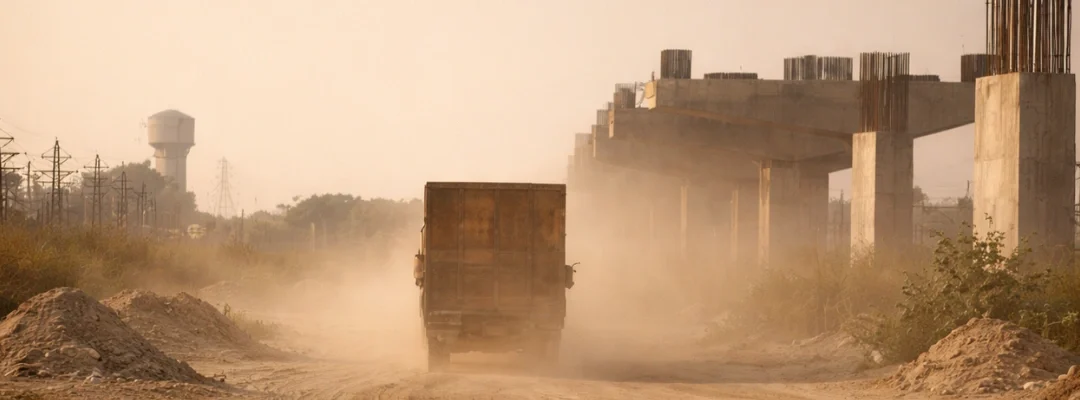
Dust pollution is not just a housekeeping problem. It is an air pollution problem.
In air-quality terms, dust pollution usually falls under particulate matter (PM), a mix of tiny solid particles and liquid droplets in the air. That mix can include dust, dirt, soot, smoke, and other airborne material. The smallest particles matter most because they can travel deep into the lungs, and some respirable particles can even reach the bloodstream.
That makes dust pollution important far beyond comfort or cleanliness. It can affect health, workplace safety, visibility, property, compliance, and overall air quality. The World Health Organization says ambient air pollution is a major global health risk: about 99% of the world’s population lived in places that did not meet WHO guideline levels in 2019, ambient air pollution was linked to 4.2 million premature deaths in 2019, and the combined burden of ambient and household air pollution is associated with 6.7 million premature deaths annually.
What is dust pollution?
Dust pollution is the presence of airborne particles that can affect health, safety, visibility, and air quality. It can come from natural sources like soil and dust storms, or from human activities such as construction, mining, traffic, industry, and agriculture.
PM10 vs PM2.5: why particle size matters
A simple way to understand dust pollution is by particle size:
- PM10 = inhalable particles generally 10 micrometers and smaller
- PM2.5 = fine particles generally 2.5 micrometers and smaller
EPA notes that the smaller the particle, the greater the health concern, because fine particles can penetrate deeper into the respiratory system.
This is why dust pollution is not always obvious. Air can look only slightly hazy, or even look normal, while fine particle levels are still high enough to affect health. Sensitive groups include children, older adults, and people with heart or lung disease, but repeated or heavy exposure can affect healthy people too.
Effects of dust pollution on health
The effects of dust pollution range from short-term irritation to serious long-term health risks.
In the short term, dust exposure may cause:
- Coughing
- Wheezing
- Throat irritation
- Shortness of breath
- Eye irritation
- Worsened asthma symptoms
Over time, repeated exposure to fine particles is linked to more serious lung and heart effects. WHO links polluted air to respiratory disease, cardiovascular disease, and premature death, and EPA identifies particle pollution as one of the most dangerous forms of air pollution.
Some workplace dusts are especially hazardous. For example, OSHA says respirable crystalline silica can cause silicosis, lung cancer, COPD, and kidney disease, while NIOSH has also linked occupational silica exposure to lung cancer, tuberculosis, and airways disease.
Why dust pollution is also a workplace safety issue
Dust is not only a health issue. In some workplaces, it is also a fire and explosion risk.
OSHA warns that combustible dust can create an explosion hazard when fine particles are suspended in air under the right conditions. This applies to more than obvious materials like wood or grain dust; some materials that seem harmless in larger pieces can become dangerous in dust form.
That makes dust control especially important in places such as:
- Woodworking shops
- Food processing plants
- Warehouses
- Mills
- Manufacturing facilities
- Metal handling and fabrication sites
For these environments, dust management is both an occupational health issue and a process safety issue.
Environmental and operational effects of dust pollution
Dust pollution also affects the environment and daily operations.
It can:
- Reduce visibility
- Settle on roads, buildings, equipment, and solar panels
- Damage vegetation
- Disrupt transport and outdoor work
- Trigger complaints and cleanup costs
- Worsen overall air quality
WMO notes that dust events affect weather, ecosystems, agriculture, transportation, and human health, not just the air people breathe.
How to control dust pollution
Dust pollution control works best when you combine source reduction, containment, and exposure control.
Control dust at the source
Reduce dust before it spreads by using water or misting, covering loose materials, stabilizing exposed soil, and limiting disturbance on dry surfaces.
Capture and contain dust
Stop dust from moving through the air by using ventilation systems, dust collectors, filters, barriers, curtains, and enclosures around dusty processes.
Reduce human exposure
Protect people by scheduling dusty work carefully, following air-quality alerts, keeping indoor spaces closed during severe dust events, and using proper protective equipment when needed.
How to reduce dust exposure at home
For households, the best approach is usually to reduce the source, limit outdoor dust intrusion, and improve filtration.
Practical steps include:
- Use a suitable HVAC filter or portable air cleaner where appropriate
- Wet dust surfaces instead of dry sweeping
- Vacuum with good filtration
- Leave shoes and dusty work gear outside living areas
- Seal gaps that let outdoor dust in
- Check local AQI during dust events or wildfire smoke episodes
EPA says indoor particles can come from both outdoor air and indoor activities, and source control plus filtration can help reduce exposure. Outdoor particles can enter through windows, doors, and small cracks in walls or foundations.
Why Choose Us
When it comes to dust pollution, you need more than general advice. You need practical solutions that protect health, improve air quality, and help you stay compliant.
Expert understanding of dust risks
We understand the difference between nuisance dust, fine particulate matter, and higher-risk exposure issues such as PM10, PM2.5, and workplace dust hazards.
Monitoring backed by real data
We focus on accurate dust monitoring and clear reporting, so you can understand current conditions, identify problem areas, and make informed decisions.
Solutions tailored to your site or property
Every environment is different. We recommend dust control measures based on your location, source of dust, exposure level, and operational needs.
Health, safety, and compliance in mind
Our approach supports cleaner air, safer working conditions, and better dust management for homes, businesses, construction sites, and industrial settings.
Practical recommendations, not guesswork
We keep things clear and actionable, whether you need help reducing indoor dust, controlling site emissions, or improving workplace air quality.
Responsive and dependable support
From assessment to recommendations, we aim to provide straightforward service, honest guidance, and solutions you can actually put into action.
FAQ
Is dust pollution the same as air pollution?
Dust pollution is one type of air pollution. It usually falls under particulate matter, which includes dust, dirt, soot, smoke, and other suspended particles.
What is the most dangerous type of dust?
That depends on the setting. In general, smaller particles are more harmful because they reach deeper into the lungs. In workplaces, hazards such as respirable crystalline silica and combustible dust can be especially serious.
How can I know if dust levels are unsafe?
For outdoor air, check your local AQI or air-quality alerts. In workplaces or industrial settings, use proper monitoring and exposure assessment rather than relying on visibility alone.
Can dust pollution affect healthy people too?
Yes. Sensitive groups face higher risk, but high or repeated exposure can also affect healthy people, especially during dust storms, wildfire smoke events, construction activity, or industrial dust releases.