
Controls surface dust
The system helps keep loose dust settled on roads, yards, and material storage areas.
A dust suppression sprinkler system wets open ground and stockpiles from fixed points. It is the most economical way to control dust over a large area.
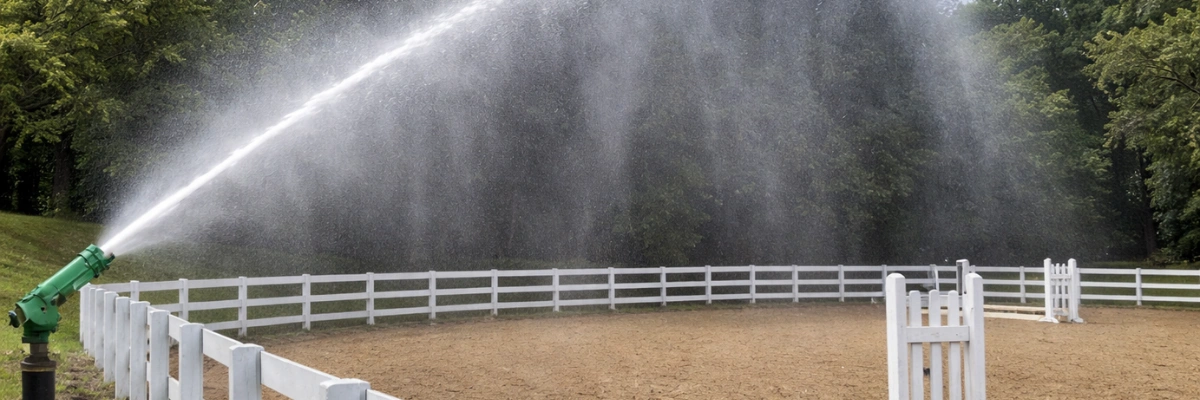
A dust suppression sprinkler system is a practical and effective solution for controlling surface dust and airborne particles in industrial, mining, construction, and material handling environments. It works by distributing water in a controlled spray pattern over dust-prone areas so that loose particles settle before they spread into the air. This helps improve site cleanliness, worker safety, and overall operating conditions.In areas such as internal roads, stockyards, coal yards, crusher surroundings, loading zones, open storage areas, and material handling yards, dust can become a major problem due to vehicle movement, wind, and dry surface conditions. A properly designed dust suppression sprinkler system helps manage this dust efficiently and supports better dust control across the site.

A dust suppression sprinkler system is a water-based dust control arrangement that uses sprinklers, pipelines, valves, pumps, and control systems to distribute water over a defined area. Its purpose is to reduce dust generation from exposed surfaces and active work zones by maintaining controlled moisture in dust-prone areas.Unlike manual water spraying, a sprinkler-based system provides more uniform coverage and can be designed for continuous, interval-based, or zone-wise operation. This makes it a dependable option for industrial applications where consistent dust control is required.
A Dust Suppression Sprinkler System works by pumping water through a pipeline network connected to strategically placed sprinklers. These sprinklers spray water over the target area in a controlled manner so that dust particles settle before they become airborne.
The system may include:
Depending on the site requirement, the sprinklers may operate continuously or in sections to maintain proper pressure and water distribution.
Dust in industrial and outdoor areas can affect operations in many ways. A well-designed sprinkler system offers several practical benefits.
The system helps keep loose dust settled on roads, yards, and material storage areas.
Reduced dust improves visibility for drivers, machine operators, and plant personnel.
Dust control helps reduce dust accumulation on nearby equipment, structures, and work zones.
A sprinkler system provides more consistent and efficient dust suppression than manual methods.
A dust suppression sprinkler system is highly useful for open industrial spaces where wide coverage is needed.
A reliable system should include features that improve performance and durability, such as:
The system can cover roads, yards, and open spaces more uniformly than manual spraying.
Water is spread more evenly across the target area, helping avoid dry patches and uneven dust control.
By keeping surfaces moist, the system reduces the amount of dust that becomes airborne.
Cleaner roads and yards improve the overall site condition and daily maintenance.
Automated or semi-automated operation reduces repeated manual intervention.
A dust suppression sprinkler system can be designed for small sections or large industrial areas depending on the site requirement.
Sprinkler systems are widely used along internal roads and haul roads to reduce dust caused by truck and equipment movement.
Stockyards handling coal, aggregates, minerals, limestone, sand, or similar materials benefit from sprinkler-based dust suppression.
The area around crusher units often becomes dusty due to material movement and vehicle activity. Sprinklers help control surface dust in these zones.
Large plant yards and outdoor storage spaces often require reliable dust control for better working conditions.
Sprinkler systems are useful in mining and quarry operations where large exposed surfaces generate dust continuously.
We design each system according to area size, dust condition, site layout, and water availability.
Our systems are planned for practical use in internal roads, stockyards, open yards, and industrial sites.
We provide well-structured systems with suitable pumps, piping, valves, and sprinkler selection.
Our focus is on effective spray coverage for better dust suppression across the required area.
Where required, we provide systems with sectional control and automation support.
We use reliable components suitable for long-term industrial and outdoor use.
Industrial sprinklers are selected by throw and flow.
Send photographs, a layout or a short description of where the dust comes from.
We review each source, the material, water and power available, and any moisture limits.
You receive a layout, equipment list and price for the system that fits.
We supply, install and commission, train your operators and stay available for service.
Send photos or a layout of the dust source. An engineer will recommend a system and send a budget price.
A dust suppression sprinkler system is a water spray system used to control dust on roads, yards, stockyards, and open industrial areas.
It is commonly used in mines, crusher plants, coal yards, haul roads, stockyards, open industrial areas, and construction sites.
The system pumps water through pipelines and sprinkler heads to spray the target area and settle dust particles.
Yes. A dust suppression sprinkler system is widely used for internal road and haul road dust control.
Yes. Large systems can be divided into zones for better pressure management and efficient operation.
Yes. It can be connected with timers, control panels, or automated systems for scheduled operation.
Yes. In most industrial applications, it provides more uniform coverage, better consistency, and reduced manual effort.
A rain gun is a large, long-throw sprinkler. Smaller sprinklers cover shorter distances with lower flow.
Yes. Zones can run on a timer, in sequence, or start automatically from wind speed or a dust monitor.
Send the basics and an engineer will come back with a recommendation and a budget price.