
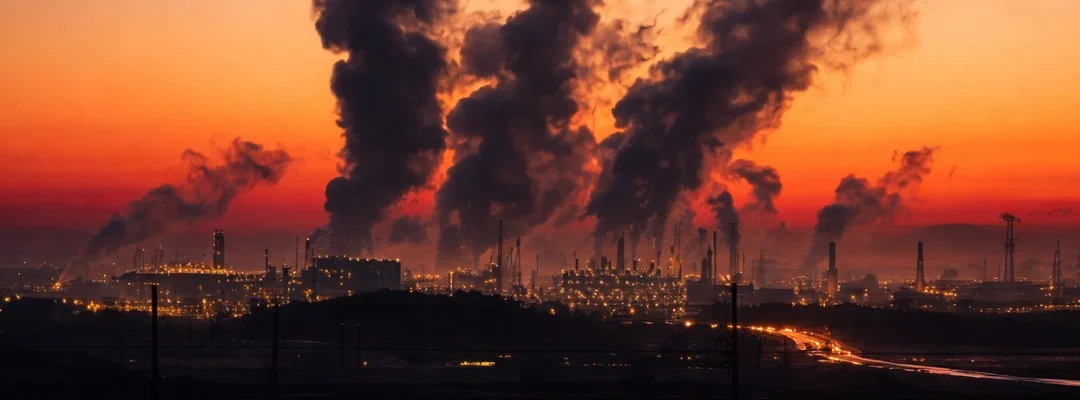
Cement dust is not only a workplace or nuisance issue. Once released into the environment, it can affect air quality, soil chemistry, vegetation, surface water, and nearby ecosystems. Reviews of the cement industry consistently identify dust emissions, particulate matter, and associated toxic substances such as heavy metals as important environmental stressors around cement plants and material-handling areas.
1. Air quality deterioration
One of the first environmental effects of cement dust is poorer air quality. Cement manufacturing and handling generate coarse and fine particles, and particulate matter can travel with wind before settling on land or water. In general, particle pollution reduces visibility and haze, and depending on composition, deposited particles can also damage crops and ecosystems.
2. Damage to vegetation
Cement dust settling on leaves can physically coat plant surfaces, interfere with gas exchange, and reduce chlorophyll and photosynthesis. Research on plants exposed to cement dust reports reduced chlorophyll content, damaged leaf cells, impaired metabolism, stunted growth, and declines in height and stem diameter near cement facilities.
3. Lower crop productivity and plant stress
The impact on vegetation goes beyond dusty-looking leaves. Studies describe cement dust as a phytotoxic stressor that can weaken respiration, transpiration, and photosynthetic performance, which in turn reduces plant vigor and productivity. In fruit and wild plant studies, exposure has been associated with chlorotic spots, leaf curling, stem shortening, bud damage, and tissue-level changes.
4. Changes in soil chemistry
Cement dust can significantly alter soil properties after repeated deposition. Reviews and plant studies report higher soil pH, electrical conductivity, bulk density, and heavy metal levels, alongside reductions in water-holding capacity, soil moisture, organic carbon, and total nitrogen in affected areas. These changes can reduce soil fertility and create longer-term ecological imbalance around cement operations.
5. Heavy metal contamination in soil and vegetation
A major environmental concern is that cement dust may carry metals such as lead, chromium, nickel, cadmium, copper, and zinc. The 2025 review summarizes multiple studies finding elevated heavy metals in soils and vegetation near cement plants, with some locations reporting enrichment above background conditions and, in some cases, above regulatory limits. That matters because these metals can persist, accumulate, and move through local food webs.
6. Water contamination risks
Cement-related dust and process residues can also affect water quality. A recent review notes that water used in cement production can become contaminated when particles such as lime, aluminum oxides, and iron are washed into it, and that cement-industry pollution pathways include water degradation alongside air and soil impacts. Dust settling onto surface water or being washed off yards and stockpiles during rain can worsen this problem.
7. Ecosystem-level effects
At a broader level, cement dust contributes to ecosystem stress by degrading air, soil, and water at the same time. EPA notes that particle deposition can damage forests and crops, alter nutrient balance, and affect ecosystem diversity. Cement-industry reviews similarly describe ecological imbalance, disturbed nearby fauna behavior, and cumulative pressure on natural systems surrounding plants and quarries.
Why cement dust is especially harmful near plants and quarries
The environmental impact is usually strongest where dust is generated and repeatedly disturbed, such as around cement plants, clinker grinding units, packing areas, haul roads, quarries, stockpiles, and bulk transfer points. Reviews of the cement sector list quarrying, blasting, drilling, trucking, packaging, and plant operations as major dust sources, which explains why nearby agricultural land and roadside vegetation often show the clearest effects.
How industries can reduce the environmental effects of cement dust
The most effective controls are practical and source-focused: enclose dusty transfer points, use dust extraction and filtration, apply water or misting strategically, stabilize roads and stockpiles, improve housekeeping, and monitor dust at the site boundary. Because repeated deposition drives many of the soil and vegetation effects, reducing emissions at the source is usually more effective than relying on cleanup alone.
FAQ
How does cement dust affect plants?
It can coat leaves, reduce chlorophyll, block normal gas exchange, and lower photosynthesis, which may stunt growth and reduce productivity.
Does cement dust change soil quality?
Yes. Studies report shifts in pH, conductivity, heavy metal content, and other soil properties near cement facilities.
Can cement dust pollute water?
Yes. Cement-industry reviews describe water contamination from washed particles and process residues, and deposited dust can also reach water bodies through runoff.
Is cement dust only a local problem?
Usually the strongest impacts are local, near emission sources and downwind areas, but particulate matter can travel before settling, so effects are not always limited to the immediate site.