
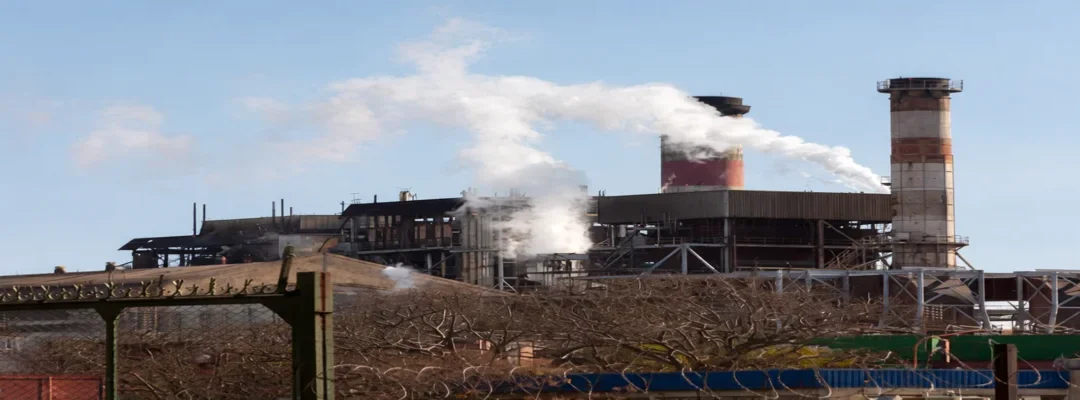
Dust pollution in manufacturing plants is often overlooked because it builds slowly over time. Unlike dramatic outdoor dust clouds, indoor industrial dust may collect around equipment, ceilings, beams, vents, and production lines. That makes it easy to ignore until it begins affecting worker safety, air quality, cleaning costs, and equipment performance.
Where manufacturing dust comes from
Manufacturing dust can come from:
- Cutting and grinding
- Mixing dry powders
- Packaging materials
- Transfer points and conveyor systems
- Product finishing and sanding
- Bulk ingredient handling
- Poor housekeeping around machinery
Every plant is different, but the risk increases when dry materials are handled repeatedly in enclosed spaces.
Why dust pollution matters in factories
Dust inside a factory can affect worker comfort and productivity, but the bigger issue is exposure over time. Airborne dust may irritate the eyes, skin, throat, and lungs. Settled dust can also clog motors, reduce equipment efficiency, and increase maintenance needs.
In some industries, certain dusts may also create fire or explosion hazards when suspended in air. That makes dust control important for both health and plant safety.
How to reduce dust pollution in manufacturing
Source capture
Use local exhaust ventilation and dust extraction close to the process generating dust.
Equipment enclosure
Enclose transfer points, mixing stations, and dusty production steps wherever possible.
Scheduled cleaning
Use safe industrial vacuum systems or wet cleaning methods instead of dry sweeping or compressed air.
Air filtration
Install appropriate filtration systems to improve indoor air quality and reduce recirculation of fine particles.
Process review
Look for repeated spill points, leaking seals, or outdated handling methods that create unnecessary dust.
Common mistakes plant managers make
One major mistake is treating dust as a cleaning issue rather than a process issue. Another is relying on general ventilation instead of point-source capture. Plants also often underestimate how much settled dust can build up in hidden areas.
Why Choose Us
Manufacturing dust control requires more than routine cleaning. It needs practical solutions that reduce dust at the source, improve indoor air quality, and support safer plant operations.
Understanding of real factory dust issues
We understand how dust is created during cutting, grinding, mixing, conveying, packaging, and finishing, and we focus on practical ways to reduce it before it spreads through the plant.
Process-based dust control approach
We treat dust as a production and air-quality issue, not just a housekeeping issue. That helps address the source of the problem instead of only cleaning up after it appears.
Support for worker safety and plant performance
Dust can affect worker comfort, breathing conditions, equipment reliability, and daily operations. We help support cleaner, safer, and better-managed industrial environments.
Practical solutions for indoor industrial spaces
From source capture and enclosure to filtration and cleaning practices, we focus on dust control methods that work in real manufacturing conditions.
Help identifying hidden dust risks
Dust often builds up in overhead areas, vents, machinery zones, and hard-to-reach spaces. We help identify these overlooked problem areas before they become bigger safety or maintenance issues.
Site-specific recommendations
Every facility is different. We provide dust control guidance based on your processes, materials, equipment layout, and exposure risks.
FAQ
What causes manufacturing dust?
Dust is created by cutting, grinding, mixing, conveying, packaging, sanding, and handling dry materials.
Why is manufacturing dust harmful?
It can affect indoor air quality, worker comfort, equipment performance, and plant safety.
How can manufacturing dust be controlled?
Common methods include source capture, enclosure, air filtration, safe cleaning, and process improvements.
Can dust build up in hidden areas?
Yes. Dust often collects on ceilings, beams, vents, equipment, and other hard-to-reach spaces.
Why is source capture important?
It helps control dust where it starts and prevents it from spreading through the facility.