
Improves worker safety
High dust levels can reduce visibility and create an uncomfortable working environment in production and material handling zones.
A steel plant handles ore, coal, coke, flux, sinter and slag, and each releases dust differently. We supply suppression for the open handling areas and dedusting for the enclosed ones.
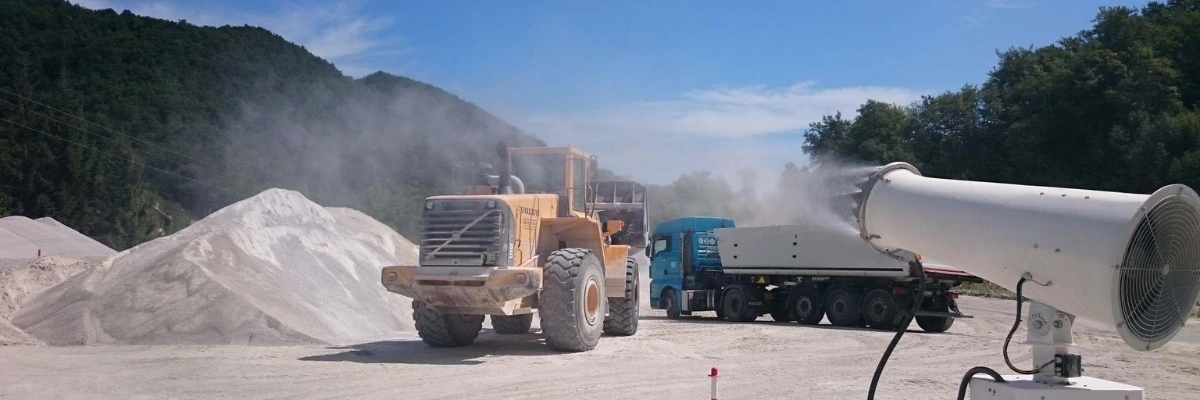
Steel plant dust control solutions help reduce airborne dust, improve visibility, protect equipment, and maintain safer, cleaner operations. Dust is generated in areas such as raw material handling, conveyors, crushers, stockyards, loading points, and internal roads, making effective dust suppression essential. We provide application-based systems using fogging, misting, nozzles, dust cannons, road dust control, and automation support for reliable performance in steel plant conditions.
Steel plant dust control solutions are engineered systems used to suppress airborne and settled dust in different areas of a steel manufacturing facility. These systems are designed based on the type of dust, process conditions, plant layout, material flow, moisture tolerance, and required coverage area. Unlike ordinary water spraying, professional dust control systems use the right droplet size, spray pattern, pressure, and placement to achieve more effective suppression with less water wastage. This makes them suitable for continuous industrial use in steel plants where dust generation is frequent and heavy.
High dust levels can reduce visibility and create an uncomfortable working environment in production and material handling zones.
Dust settles on structures, floors, conveyors, and equipment, increasing housekeeping effort and affecting overall plant cleanliness.
Dust buildup on motors, bearings, electrical panels, rollers, and moving parts can increase maintenance requirements and affect reliability.
If not controlled at the source, dust from one section can spread to nearby areas and create wider contamination.
A well-designed dust suppression system helps reduce visible dust emissions and supports more controlled plant operation.
Our systems work by applying properly selected fog, mist, or spray droplets directly at the dust source. These droplets interact with dust particles, making them heavier so they settle instead of remaining airborne.
The system is designed based on:
This approach helps ensure that the dust control system performs reliably under actual steel plant operating conditions.
Our systems are built for harsh industrial environments and continuous use. Key features include:
Installing the right steel plant dust control solutions offers several advantages for plant operations:
Controls dust closer to the source and reduces airborne particle spread.
Creates cleaner and safer surroundings for plant personnel and visitors.
Uses water more efficiently compared to uncontrolled manual spraying.
Helps minimize dust accumulation on structures and plant equipment.
Improves visibility around loading points, transfer areas, and traffic zones.
Can be designed for conveyors, stockyards, roads, unloading zones, and process areas.

Here are short 1-line descriptions for each:
Systems designed specifically for your plant layout, dust source, and process conditions.
Wide-area dust control for stockyards, unloading zones, and other open outdoor sections.
Solutions that reduce surface dust on internal roads, traffic paths, and open plant yards.
Targeted dust control installed directly at critical dust-generating process points.
Automatic operation through timers, sensors, or control panels for consistent dust suppression.
Durable components built to perform in continuous steel plant operating conditions.
The split between wet suppression and dry dedusting follows the process.
Send photographs, a layout or a short description of where the dust comes from.
We review each source, the material, water and power available, and any moisture limits.
You receive a layout, equipment list and price for the system that fits.
We supply, install and commission, train your operators and stay available for service.
Send photos or a layout of the dust source. An engineer will recommend a system and send a budget price.
Steel plant dust control solutions are systems designed to suppress and manage dust generated in steel manufacturing, material handling, storage, and loading areas.
Dust control is commonly needed at conveyors, hoppers, crushers, transfer points, stockyards, sinter sections, coke handling areas, loading points, and internal roads.
Dust cannon systems, yard misting lines, and road dust control systems are commonly used for large open steel plant areas.
Yes. A properly designed dust suppression system uses controlled spray application and targeted coverage, which reduces unnecessary water use.
Yes. These systems can be customized according to dust load, plant layout, process condition, moisture limits, and required coverage area.
Yes. Dust control systems can be integrated with timers, sensors, solenoid valves, and control panels for automatic operation.
Localized nozzle systems are commonly used at conveyors, chutes, hoppers, loading points, and crusher discharge areas where dust is generated at specific points.
Source-based suppression controls dust before it spreads into nearby zones, helping improve efficiency, visibility, and plant cleanliness.
With zoned sprinklers over the piles, fog cannons at stacking and reclaiming, and wind fencing on the windward side.
At enclosed points handling dry or hot material, such as the stock house, sinter and coke screens and transfer houses.
Send the basics and an engineer will come back with a recommendation and a budget price.