
Capture hoods and enclosures
Shaped and positioned so dust is drawn in at the lowest possible air volume.
Material handlingA dedusting system removes dust from the air by drawing it through a filter instead of knocking it down with water. It is the right choice where the material must stay dry or the dust has to be recovered.
Dedusting means capturing dust-laden air at the point of release, carrying it through ducting, separating the dust in a filter and discharging clean air. Compared with wet suppression it adds no moisture to the product.
Each part is sized from the same airflow calculation, so they have to be designed together.
Shaped and positioned so dust is drawn in at the lowest possible air volume.
Material handlingSized to keep dust moving without settling, with balancing dampers and access doors.
Dust collectorsPulse-jet bag filter or cartridge collector selected for the dust load and particle size.
Dust collectorsFan sized for system resistance, with rotary valve or screw discharge and differential-pressure monitoring.
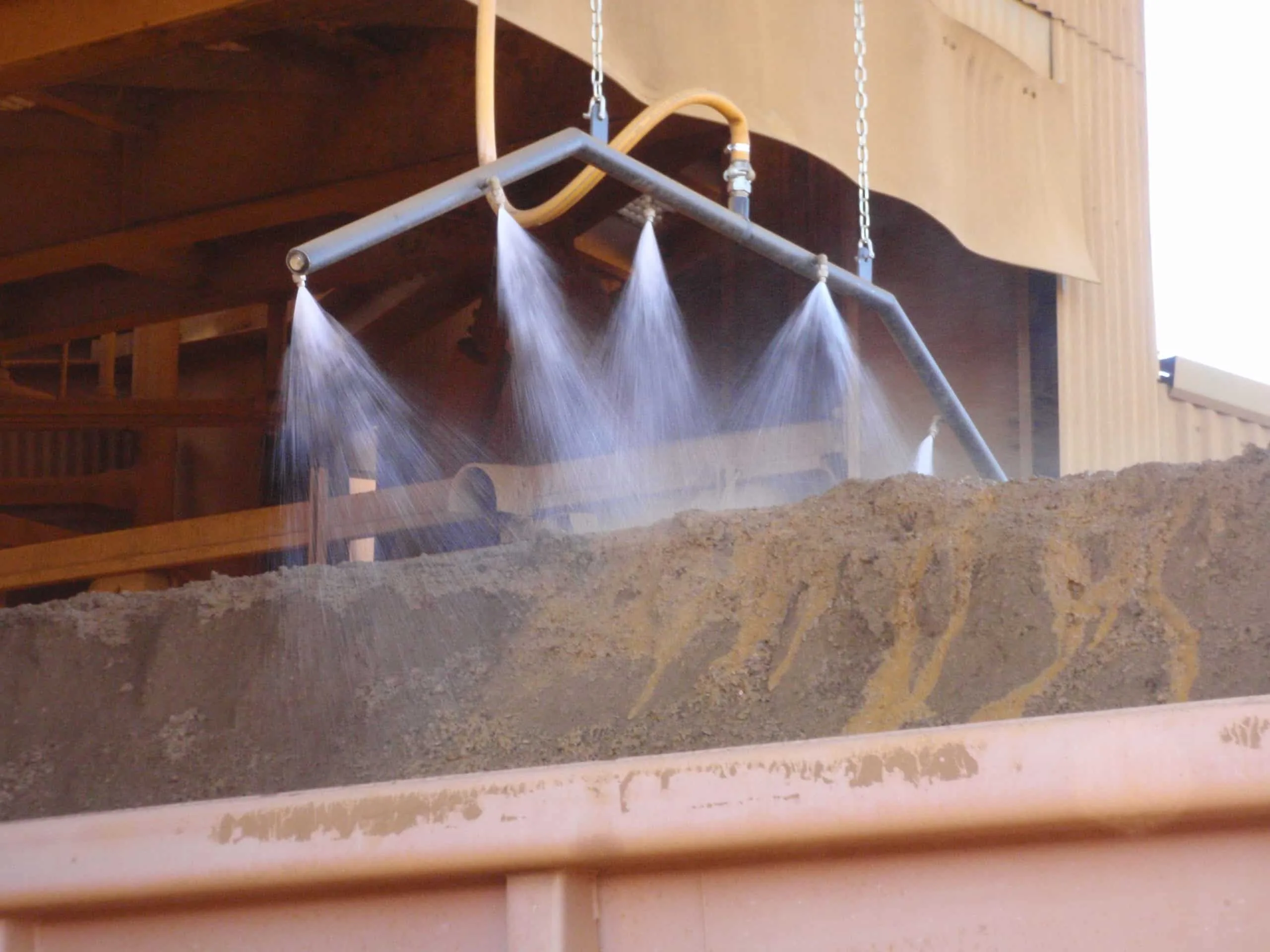
Automation & controlsUse suppression where the material can take a little moisture and the source is open, such as stockpiles, roads and crusher hoppers. Use dedusting where the source can be enclosed and the material must stay dry. Many plants use both: fog at the open hopper and a dedusting unit on the enclosed transfer that follows.
Send photographs, a layout or a short description of where the dust comes from.
We review each source, the material, water and power available, and any moisture limits.
You receive a layout, equipment list and price for the system that fits.
We supply, install and commission, train your operators and stay available for service.
Send photos or a layout of the dust source. An engineer will recommend a system and send a budget price.
It is an extraction and filtration system that captures dust at source through hoods, conveys it through ducting and separates it in a bag or cartridge filter before releasing clean air.
At raw material transfer points, stock house bunkers, screens, sinter and coke handling, and casting areas, where dry dust must be collected.
Dedusting removes dust from the air with a filter and keeps material dry. Dust suppression uses water droplets or fog to make dust settle at the source.
From the air volume needed at each hood, the duct losses and the dust load. That gives the fan duty and the filter area.
Send the basics and an engineer will come back with a recommendation and a budget price.