
Wetting agents (surfactants)
Lower the surface tension of water so it spreads over and penetrates hydrophobic dust. Dosed in small quantities into spray and fog systems.
Water spray systemWater alone evaporates, and some dusts repel it. Dust suppression chemicals make each litre of water do more: they help it wet the dust, hold moisture in the surface, or bind fine particles together.
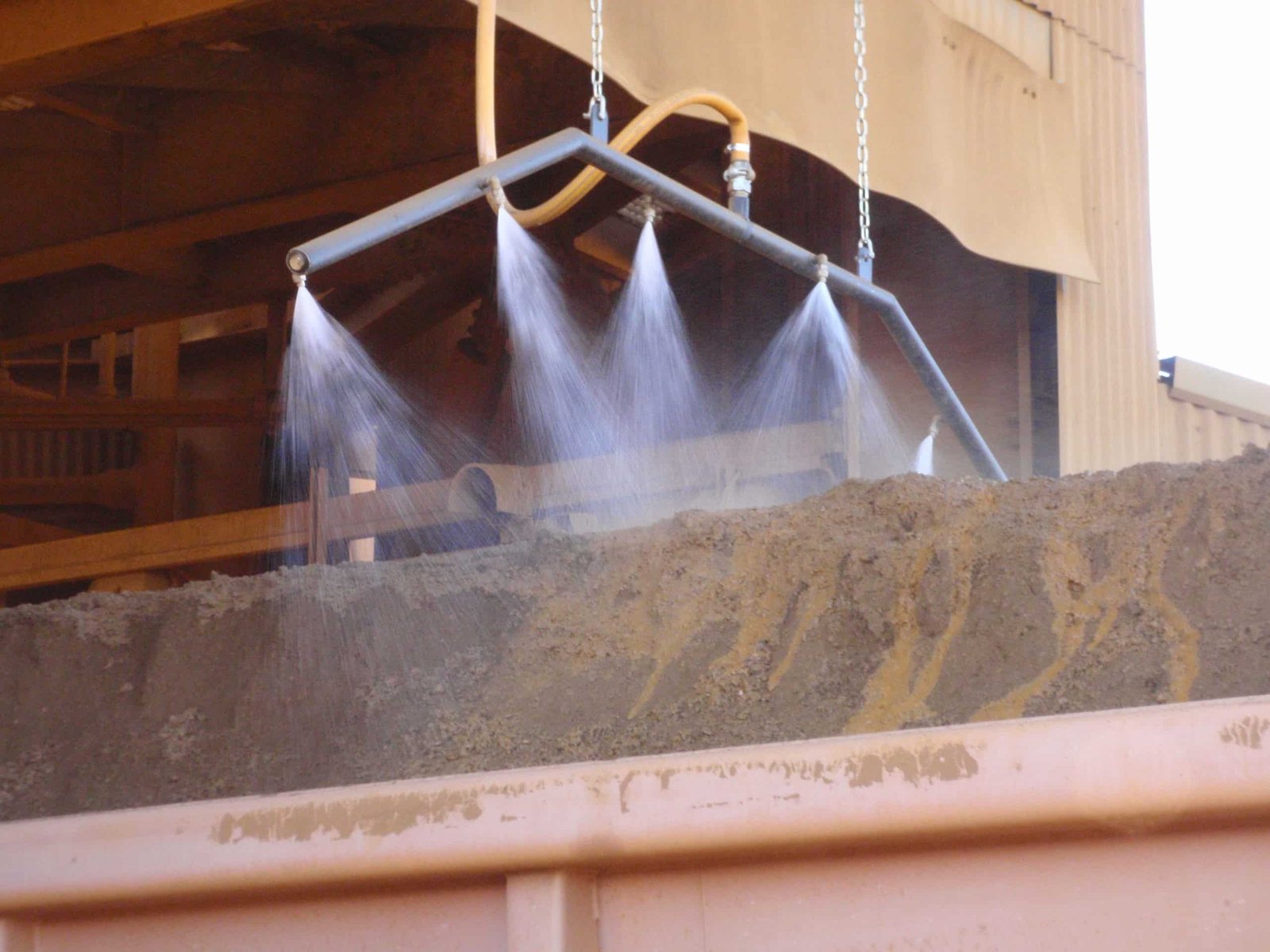
Fine coal, petcoke and some ores are hydrophobic: water beads on the particle instead of wetting it. On roads and piles, water gives control only until it dries.
We match the chemistry to the material and to how long the control needs to last.
Lower the surface tension of water so it spreads over and penetrates hydrophobic dust. Dosed in small quantities into spray and fog systems.
Water spray systemAcrylic, vinyl and lignin-based products that glue fines together on road surfaces and stockpiles.
Haul roadsCalcium and magnesium chloride draw moisture from the air to keep unpaved surfaces damp for longer.
Haul roadsForm a wind-resistant skin over dormant stockpiles, overburden dumps and tailings.
Stockpiles & stockyardsChemicals are only as good as the way they are applied. We supply dosing pumps, mixing tanks and injection points sized for your spray system, or spray bars for tanker application. Dose rates are set from a site trial, because the same product behaves differently on different materials.
Before recommending any product we ask about run-off, nearby water bodies, the downstream process and worker contact, and we provide the safety data sheet with every supply.
Send photographs, a layout or a short description of where the dust comes from.
We review each source, the material, water and power available, and any moisture limits.
You receive a layout, equipment list and price for the system that fits.
We supply, install and commission, train your operators and stay available for service.
Send photos or a layout of the dust source. An engineer will recommend a system and send a budget price.
The common families are surfactant wetting agents, polymer or lignin binders, chloride salts and crusting agents. Which one suits you depends on the material and whether you need short-term or long-term control.
Many are, but not all, and it depends on dose and site conditions. Ask for the safety data sheet and check run-off paths before use. We recommend products with that in mind.
Yes, that is their main purpose. Wetting agents let a spray work with less water, and binders or salts extend the time between applications on roads and piles.
Usually yes, with a dosing pump and injection point upstream of the nozzles, provided the product is compatible with the nozzles and seals.
Send the basics and an engineer will come back with a recommendation and a budget price.