
Crusher and transfer points: dry fog
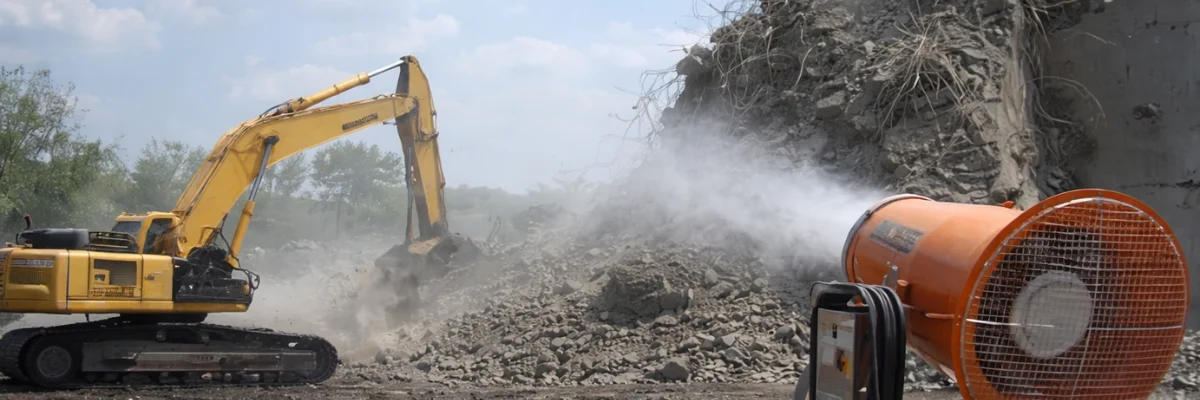
Fog captures airborne dust at the hopper and transfer chutes while adding very little moisture to the limestone.
Dry fog systemA cement plant handles dusty material at every stage, from limestone blasting to bagged cement. We supply dust suppression and dedusting systems for the points where fugitive dust escapes.
Stack emissions are handled by the main process filters. The dust that settles on roads, roofs and neighbours mostly comes from open handling points.
Each area gets the method that controls dust without upsetting the process.
Fog captures airborne dust at the hopper and transfer chutes while adding very little moisture to the limestone.
Dry fog systemZoned sprinklers keep limestone, coal and additive piles damp.
Stockpiles & stockyardsHot clinker and finished cement must stay dry, so dust is extracted and filtered instead of sprayed.
Dedusting systemsMist cannons and road sprinklers control dust from traffic.
Haul roadsRegulators and neighbours judge a cement plant by what they can see: dust plumes at transfer points and deposits outside the boundary. Controlling fugitive sources also cuts material loss and bearing wear, and it reduces the load on housekeeping crews.
Send photographs, a layout or a short description of where the dust comes from.
We review each source, the material, water and power available, and any moisture limits.
You receive a layout, equipment list and price for the system that fits.
We supply, install and commission, train your operators and stay available for service.
Send photos or a layout of the dust source. An engineer will recommend a system and send a budget price.
Process gas is cleaned by bag filters or electrostatic precipitators. Fugitive dust from crushers, transfers, yards and roads is controlled with dry fog, water spray, sprinklers and local dedusting.
No. Clinker and cement react with water, so those points use enclosure and dust extraction. Water-based suppression is used on limestone, coal, additives and roads.
Only marginally. Dry fog adds a very small amount of water compared with conventional spray, which is why it is preferred ahead of the raw mill.
Yes. Most work is done on a running plant, with tie-ins scheduled during planned stoppages.
Send the basics and an engineer will come back with a recommendation and a budget price.