
Downdraft tables
A downdraft table draws dust and fumes down through the work surface, away from the operator's face. It is the simplest way to control dust from manual grinding, sanding and welding.
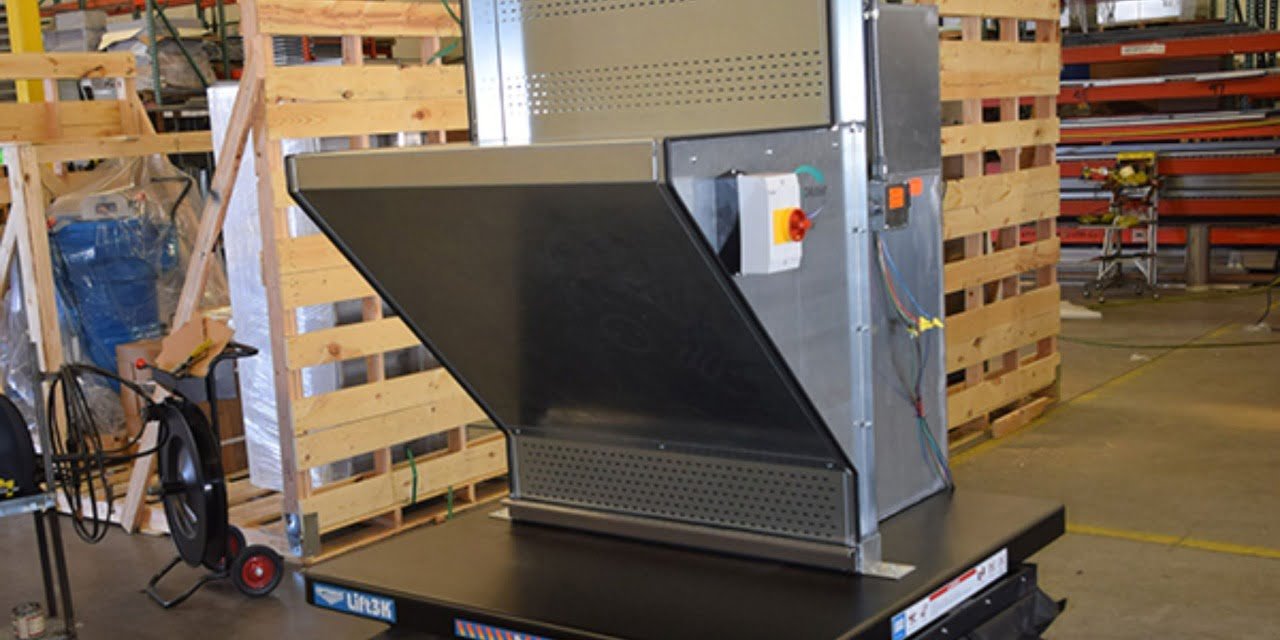
Downdraft table dust suppression system
What is Downdraft Table? In short, you can use a downdraft table to keep your work area clean when doing any small tool work. As a result they are popular with woodworkers. This is because when sawing or sanding, a downdraft table can collect dust and small debris. Typically constructed from steel and using a powerful motor, a downdraft table can make working much more efficient. Additionally, many downdraft tables include perforated steel table tops and large filters to protect the motors. These units are often called downdraft extractors, or grinding tables. Altogether they can be called downdraft systems.
Downdraft Table Design Downdraft systems mostly come in two types: stand up or sit down. Which one you choose depends on your specific use. Another characteristic is the motor. In general, the more powerful the motor, the more airflow you can produce. The resulting power is measured in CFM (Cubic Feet per Minute). Larger airflow means that the unit can quickly draw dust and debris into the hopper. An important consideration is the downdraft table top. A properly perforated top is important. Perforations that are too large or too small will impact airflow as well as limit what debris can be pulled into the table hopper. Applications
- Welding – Ideal capture-at-source equipment for heavy duty welding applications like stick welding, MIG and TIG welding.
- Deburring – Using quality capture-at-source equipment is the only effective way to eliminate fine dusts from the environment when abrasives are used to deburr, polish or finish fabricated materials.
- Grinding – When grinding metals or plastics, a well-ventilated downdraft table will remove dust particles at the source and greatly improve air quality.
- Sanding – Sanding applications are common with wood, metal or plastic, and containing the dust that’s produced is crucial to a safe workplace.
- Cutting – Plasma cutting applications can produce toxic fumes, gasses and particles, but a high quality downdraft table provides a safe and efficient solution.
- Mixing – When combining granules or powders in an industrial workspace, maintaining air quality is challenging, but a well-placed downdraft table makes all the difference.
Choosing a downdraft table
Match the table to the work and to the dust.
- Worktop size and load rating for your largest part
- Dry filter for most metal and wood dust
- Wet type for combustible metal dust such as aluminium
- Side and back panels to improve capture on tall work
From enquiry to a working system
Share the problem
Send photographs, a layout or a short description of where the dust comes from.
Site study
We review each source, the material, water and power available, and any moisture limits.
Design and quote
You receive a layout, equipment list and price for the system that fits.
Install and support
We supply, install and commission, train your operators and stay available for service.
Related systems and applications
Ready to get started? Let’s discuss your project.
Send photos or a layout of the dust source. An engineer will recommend a system and send a budget price.
What is a downdraft table used for?
It is a workbench with built-in extraction that pulls dust and fumes downward during grinding, sanding, polishing and welding.
Do I need a wet downdraft table?
Wet tables are used for combustible metal dusts. For most steel grinding and woodworking a dry filter table is suitable.
Tell us where the dust is. We will tell you what fits.
Send the basics and an engineer will come back with a recommendation and a budget price.
- No-obligation budgetary proposal
- Design matched to your material and site
- Supply, installation and service