
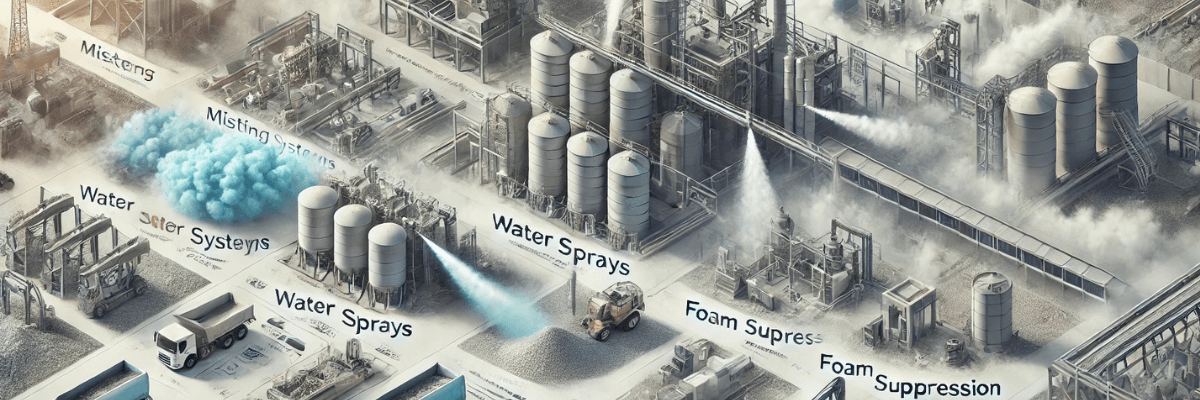
- No single technology suits every source
- Fog captures airborne dust; spray wets material
- Collection is used where material must stay dry
Dust suppression is a vital component of industrial pollution control. Whether it’s a mining operation, a cement plant, or a manufacturing facility, airborne dust can affect workplace safety, environmental compliance, and operational efficiency. Selecting the right dust suppression technology is key to tackling these challenges effectively.
In this blog, we’ll compare various dust suppression technologies, their advantages, disadvantages, and applications to help you identify the best solution for your industry.
Why dust suppression matters
Uncontrolled dust emissions can lead to:
- Respiratory health risks for workers.
- Increased equipment wear and maintenance costs.
- Regulatory fines for non-compliance with environmental standards.
- Reduced efficiency in material handling processes.
Effective dust suppression ensures cleaner air, a safer work environment, and better operational productivity.
Overview of dust suppression technologies
Here are the most common dust suppression methods:
- Plain Water Sprays
- Ultrasonic Dry Fog Systems
- Chemical-Enhanced Water Systems
- Foam-Based Systems
- Fog and Mist Systems
- Rain Guns and Fog Cannons
1. plain water sprays
How It Works: Plain water is sprayed over the material to increase its weight and cohesion, preventing dust particles from becoming airborne.
Applications:
- Conveyor belts
- Crushing operations
- General material handling
Advantages:
- Simple and low-cost setup.
- Readily available and environmentally safe.
Disadvantages:
- Not effective for hydrophobic materials like coal or coke.
- Excess moisture can cause material buildup on equipment and reduce efficiency in thermal processes.
2. ultrasonic dry fog systems
How It Works: Ultrasonic nozzles generate ultra-fine droplets (<10 microns), which agglomerate with dust particles of similar size, causing them to settle.
- Transfer points
- Cement production
- Dust-sensitive industries
- Minimal water usage (0.01% to 0.05% of material weight).
- Effective for moisture-sensitive materials.
- Low-maintenance and long-lasting nozzles.
- Requires high-quality water to prevent nozzle clogging.
- Initial setup costs may be higher.
3. chemical-enhanced water systems
How It Works: Surfactants are added to water to reduce surface tension, making it easier for droplets to bond with hydrophobic dust particles.
- Coal and petroleum coke handling
- Mining operations
- High-dust environments
- Improves water’s dust suppression performance.
- Reduces overall water usage.
- Additional costs for chemicals and water treatment.
- May require periodic replenishment of surfactants.
4. foam-based systems
How It Works: Foam is created by mixing water, air, and surfactants, forming a blanket over dusty materials to trap particles.
- Crushers and screeners
- Enclosed conveyor systems
- Heavy material transfer points
- Minimal moisture addition.
- Creates a visible barrier to dust.
- Requires proper surfactant formulation for effective results.
- More complex setup compared to plain water sprays.
5. fog and mist systems
How It Works: Fine droplets are produced by high-pressure nozzles or compressed air systems to capture airborne dust.
- Transfer points
- Crusher operations
- Dust suppression in enclosed areas
- Effective for areas with low turbulence.
- Minimal water usage.
- Site-specific and requires precise installation.
- May require enclosures to prevent mist from dissipating.
6. rain guns and fog cannons
How It Works: Large-scale devices spray water over vast open areas, creating a curtain of droplets to capture dust.
- Open-pit mining
- Stockyards
- Construction sites
- Covers large areas efficiently.
- Ideal for outdoor operations.
- High water consumption.
- May not be suitable for enclosed areas.
Comparison of dust suppression technologies
| Technology | Water Usage | Best For | Challenges |
|---|---|---|---|
| Plain Water Sprays | High | Basic material handling | Excess moisture can reduce efficiency. |
| Ultrasonic Dry Fog Systems | Minimal | Dust-sensitive industries | Higher setup costs, requires filtration. |
| Chemical-Enhanced Systems | Moderate | Hydrophobic materials | Additional costs for chemicals. |
| Foam-Based Systems | Low | Enclosed areas and crushers | Requires surfactant management. |
| Fog and Mist Systems | Minimal | Enclosed transfer points | Requires precise installation. |
| Rain Guns/Fog Cannons | High | Open-pit operations | Not suitable for enclosed areas. |
How to choose the right system
1. identify your industry’s needs:
- Does your material resist water? Consider chemical-enhanced systems.
- Is your operation sensitive to added moisture? Ultrasonic dry fog may be the best choice.
2. assess the dust sources:
- For point-source emissions like crushers, foam systems or ultrasonic fog work well.
- For wide-area suppression, rain guns and fog cannons are effective.
3. budget and maintenance:
- Low-cost options like plain water sprays may suffice for less critical operations.
- Advanced systems like ultrasonic fog offer long-term savings despite higher initial costs.
4. environmental considerations:
- Fog systems are ideal for environmentally sensitive industries as they minimize water usage.
- Choose systems with minimal chemical usage to align with sustainability goals.
Frequently asked questions
Which dust suppression technology is best?
It depends on the source. Fog for fine dust at enclosed points, sprinklers for open areas, cannons for large zones, collection for dry processes.